
Everest Base Camp Trek


Trip Overview

About the Everest Base Camp Trek
The Everest Base Camp Trek is a classic Himalayan journey that takes trekkers to the foothills of Mount Everest through Nepal’s Khumbu Region. The route lies inside Sagarmatha National Park and follows established mountain trails used by Sherpa communities for generations. It is designed for trekkers seeking high-altitude exposure without technical climbing.
Everest Base Camp itself is located at 5,364 meters on the south side of Mount Everest, below the Khumbu Icefall. The trek typically covers around 130 kilometers round trip and reaches its highest point at Kala Patthar. Throughout the journey, trekkers pass Sherpa villages, monasteries, glacial valleys, and alpine landscapes within Sagarmatha National Park.
This trek is suitable for physically fit travelers, including first-time high-altitude trekkers when supported by proper acclimatization and professional guidance. Trekking to EBC is fundamentally different from climbing Mt. Everest, as it involves walking on established trails rather than mountaineering skills, ropes, or technical equipment.
Everest Base Camp Trek Itinerary - 12 Days
Show All
Fly from Kathmandu to Lukla and Trek to Phakding
-
 Accomodation: Tea house/ Lodge
 -
 Meals: Lunch and Dinner
 -
 Elevation: 2610 M
 -
 Duration: 30 minute flight and 4 hrs trek
 -
Distance: 7.5 KM
Trek from Phakding to Namche Bazaar
-
Accomodation: Tea house/Lodge
-
Meals: Breakfast, Lunch & Dinner
-
Elevation: 3440 M
-
Duration: 5-6 hrs
-
Distance: 10.5 KM
Acclimatization Day in Namche Bazaar
-
Accomodation: Tea house/ Lodge
-
Meals: Breakfast, Lunch & Dinner
-
Elevation: 3440 M
-
Duration: 4-5 hrs
Trek from Namche Bazaar to Tengboche
-
Accomodation: Tea House/ Lodge
-
Meals: Breakfast, Lunch & Dinner
-
Elevation: 3870 M
-
Duration: 5-6 hrs
-
Distance: 9.2 KM
Trek from Tengboche to Dingboche
-
Accomodation: Tea house/ Lodge
-
Meals: Breakfast, Lunch & Dinner
-
Elevation: 4410 M
-
Duration: 5-6 hrs
-
Distance: 10 KM
Acclimatization Day – Dingboche
-
Accomodation: Tea house/ Lodge
-
Meals: Breakfast, Lunch & Dinner
-
Elevation: 4410 M
Trek from Dingboche to Lobuche
-
Accomodation: Tea house/ Lodge
-
Meals: Breakfast, Lunch & Dinner
-
Elevation: 4940 M
-
Duration: 4-5 hrs
-
Distance: 7.9 KM
Trek from Lobuche to Everest Base Camp; Return to Gorak Shep
-
Accomodation: Tea house/ Lodge
-
Meals: Breakfast , Lunch & Dinner
-
Elevation: 5170 M
-
Duration: 7-8 hrs
-
Distance: 13 KM
Trek from Gorak Shep Kala Patthar & hike down to Pheriche
-
Accomodation: Tea house/ Lodge
-
Meals: Breakfast, Lunch & Dinner
-
Elevation: 4240 M
-
Duration: 8-9 hrs
-
Distance: 15 KM
Trek From Pheriche to Namche Bazaar
-
Accomodation: Tea house/ Lodge
-
Meals: Breakfast, Lunch & Dinner
-
Elevation: 3440 M
-
Duration: 6-7 hrs
-
Distance: 15 KM
Trek from Namche Bazaar to Lukla
-
Accomodation: Tea house/ Lodge
-
Meals: Breakfast, Lunch & Dinner
-
Elevation: 2860 M
-
Duration: 6-7 hrs
-
Distance: 14.5 KM

Fly from Lukla to Kathmandu
-
Accomodation: Hotel in Kathmandu
-
Meals: Breakfast
-
Elevation: 1340 M
-
Duration: 30 min flight
Everest Base Camp Trek Route Map
The EBC trek route follows the historic trade and expedition trail of the Khumbu Valley, beginning with a mountain flight to Lukla and ascending gradually along the Dudh Koshi River. The trail climbs through key settlements such as Phakding, Namche Bazaar, Tengboche, Dingboche, and Lobuche, before reaching Gorak Shep and Everest Base Camp (5,364 m) at the foot of the Khumbu Icefall. The route lies entirely within Sagarmatha National Park, combining steady elevation gain with strategic acclimatization stops to manage altitude exposure.
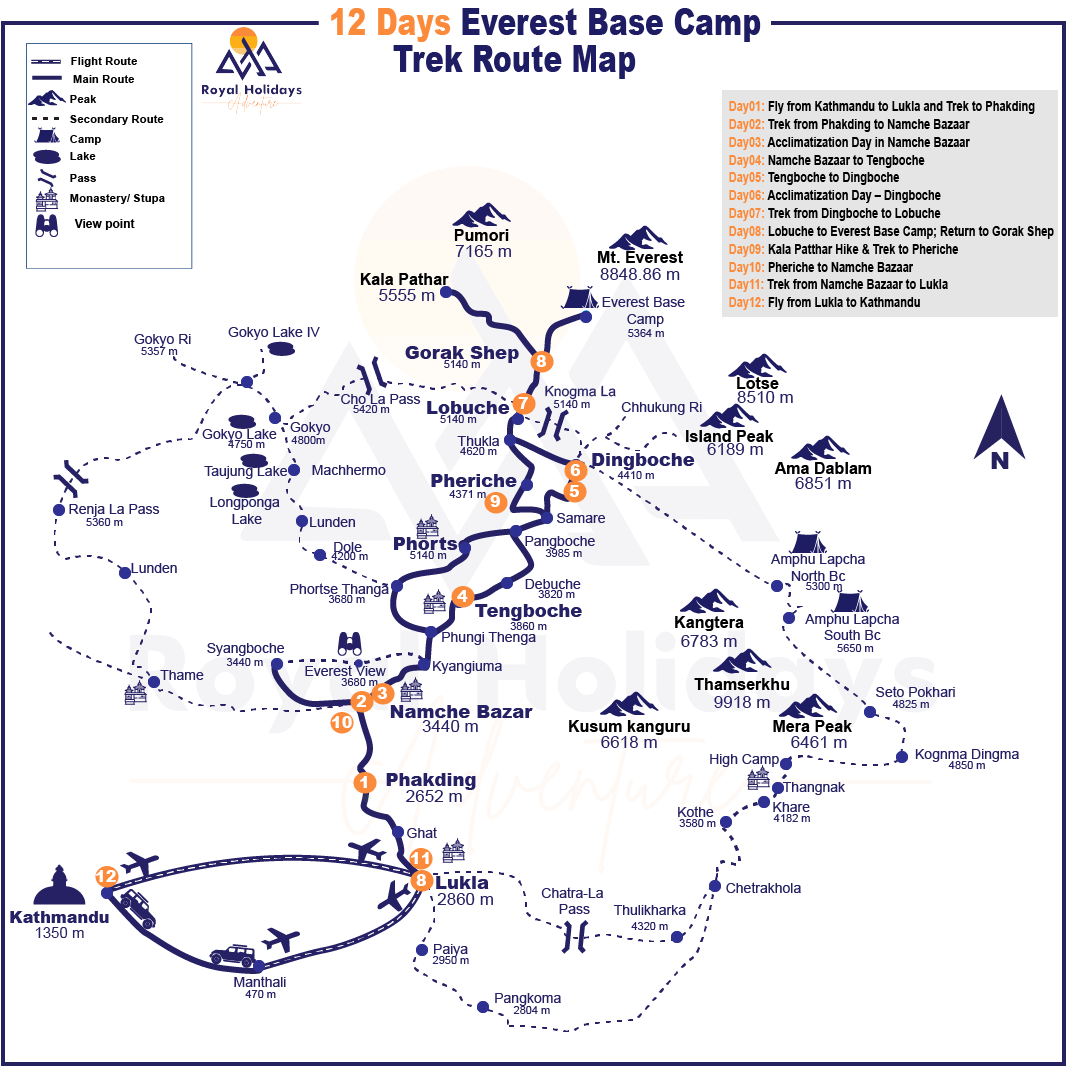
An EBC trek map visually outlines the valley-based ascent, major villages, river crossings, and the alignment of the trail alongside the Khumbu Glacier. It helps trekkers understand altitude progression, the placement of acclimatization days in Namche Bazaar and Dingboche, and why the route follows a linear out-and-back structure rather than a circuit. This clarity is essential for planning pacing, safety, and logistics on Nepal’s most iconic high-altitude trek.
Everest Base Camp Trek Cost Includes and Excludes
-
 Kathmandu airport pick up and transfer to hotel
-
2-Nights Accommodation in Kathmandu at Boutique Hotel with Breakfast
-
Eleven night Accommodation during the trek in teahouse/lodge (twin sharing)
-
Kathmandu-Lukla-Kathmandu both way flights tickets
-
Domestic airport transfers by private car
-
A highly professional, English-speaking and government-licensed trekking guide.
-
A highly professional, English-speaking and government-licensed trekking guide.
-
3 meals a day during the trekking (breakfast, Lunch & Dinner)
-
All required documentation including local trekking permits and national park permits
-
All government taxes including VAT, tourist service charges
-
Sleeping bag, Basic medical kits, water purification tablet, and duffel bags
-
 Any Kinds of drinks
-
Travel insurance
-
Personal Expenses; hot shower, internet, tips
Altitude & Acclimatization on Everest Base Camp Trek
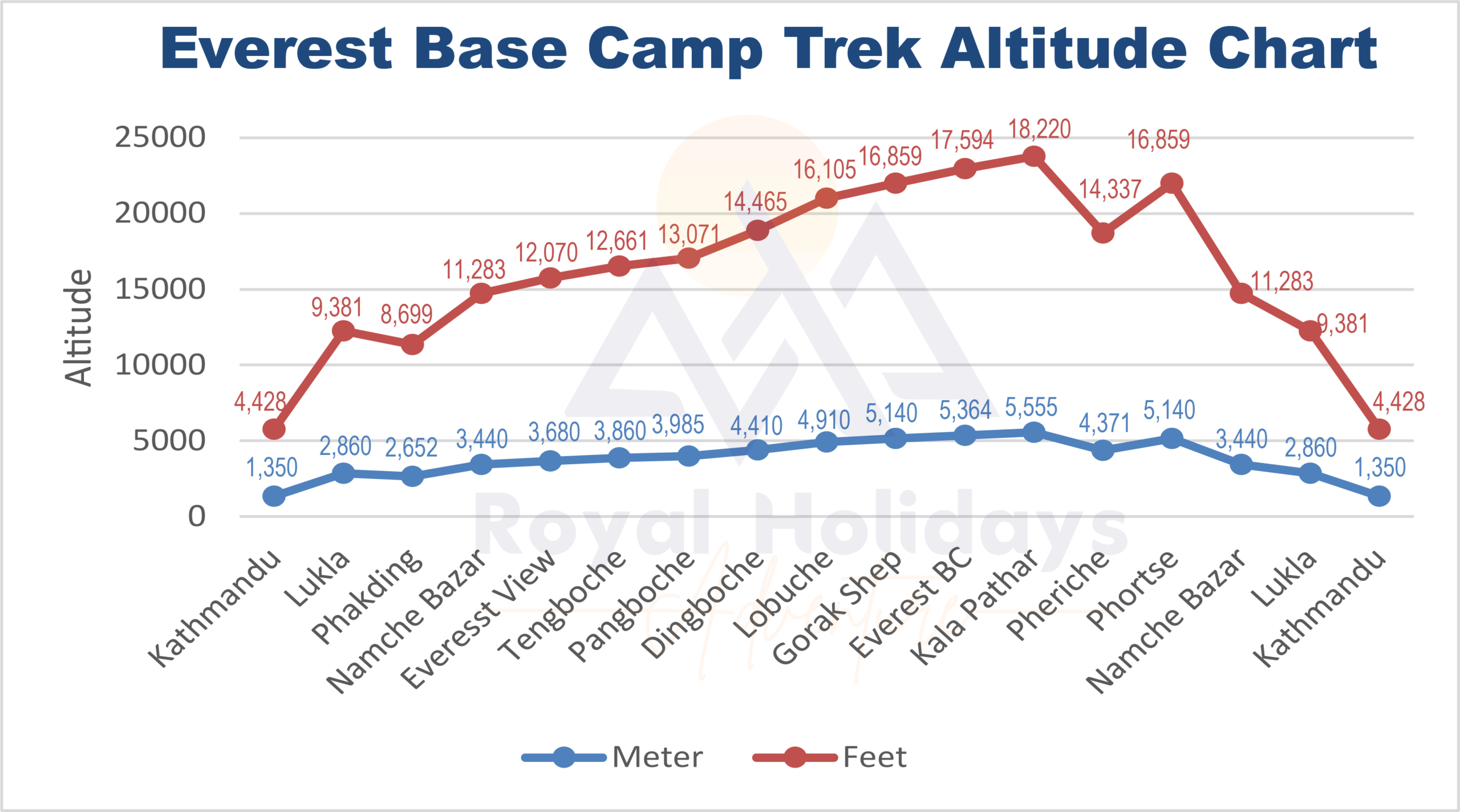
Altitude exposure is the defining safety factor on the Everest Base Camp Trek, as trekkers gradually move from mid-hill elevations into extreme high-altitude terrain. Effective acclimatization is essential to maintain physical performance, reduce health risks, and ensure a successful ascent to base camp.
Highest Sleeping Altitude vs Highest Point (Kala Patthar)
The highest point reached on the trek is Kala Patthar (5,643 m), climbed as a short early-morning hike for panoramic views of Mount Everest and surrounding peaks. The highest overnight stay, however, is Gorak Shep (5,170 m), which limits prolonged exposure at extreme altitude. This separation between hiking altitude and sleeping altitude helps manage physiological stress in low-oxygen conditions.
Role of Namche & Dingboche Acclimatization Days
The Everest Base Camp itinerary includes two dedicated acclimatization days, strategically placed to support gradual altitude adaptation.
- Namche Bazaar (3,440 m) serves as the first adjustment point, where short hikes to higher viewpoints allow controlled exposure before returning to sleep lower.
- Dingboche (4,410 m) functions as the second acclimatization stop, preparing trekkers for sustained movement above 4,500 meters.
Beyond these points, altitude gain is carefully moderated, following the “climb high, sleep low” principle where possible.
Altitude Sickness (AMS): Risks & Prevention
Acute Mountain Sickness (AMS) remains a primary concern on the Everest route, especially above 3,500 m. Typical symptoms include headache, nausea, dizziness, fatigue, and disrupted sleep.
Key prevention strategies include:
- Gradual ascent with planned acclimatization days
- Adequate hydration and regular meals
- Avoiding alcohol and overexertion
- Immediate descent if symptoms escalate
- Strict adherence to these protocols significantly lowers altitude-related complications.
Why Professional Support Is Important at Altitude
Experienced trekking guides play a critical role in altitude safety on the EBC Trek. Professional support ensures:
- Continuous monitoring of physical condition and AMS symptoms
- Pacing adjustments based on individual acclimatization response
- Informed decision-making at critical altitude points
- Efficient coordination of emergency evacuation when required
- Guided trekking provides an added layer of safety in an environment where conditions can change rapidly.
Book Your Everest Base Camp Trek with Royal Holidays Adventure
Experience the majestic Himalayas with our seasoned local guides, who prioritize your safety and acclimatization at every step. With over a decade of proven expertise and hundreds of successful treks, we ensure a seamless, life-changing journey. Book your Everest Base Camp trek with us today for an expertly managed and unforgettable mountain adventure. Contact us for a free consultation to plan your dream trip.
Fixed Departure Dates
Are you a solo traveler or a small group looking to join a trek? Our fixed departure dates are perfect for you. Simply choose a date that suits your schedule and confirm your booking instantly to join an existing group. If you do not find a suitable date, please feel free to contact us by email. We will be happy to assist you and arrange a departure that works best for you.
No departures found for selected criteria.
